





There's a Class for That: ANSI 107 Simplified
Struck-by hazards are preventable, but only when visibility is built for real work environments.
In 2023, 310 workers were fatally struck by moving vehicles on jobsites. Nearly half of all construction fatalities involved these types of incidents. From low-light tasks to roadside repairs, visibility isn’t optional, it’s life-saving.
And when thermal hazards like arc flash or flash fire enter the picture, your gear has to withstand heat, flame, and exposure without sacrificing comfort or compliance.
That’s where ANSI/ISEA 107-2020 comes in and where DRIFIRE® steps up with dual-compliant FR hi-vis solutions you can trust.
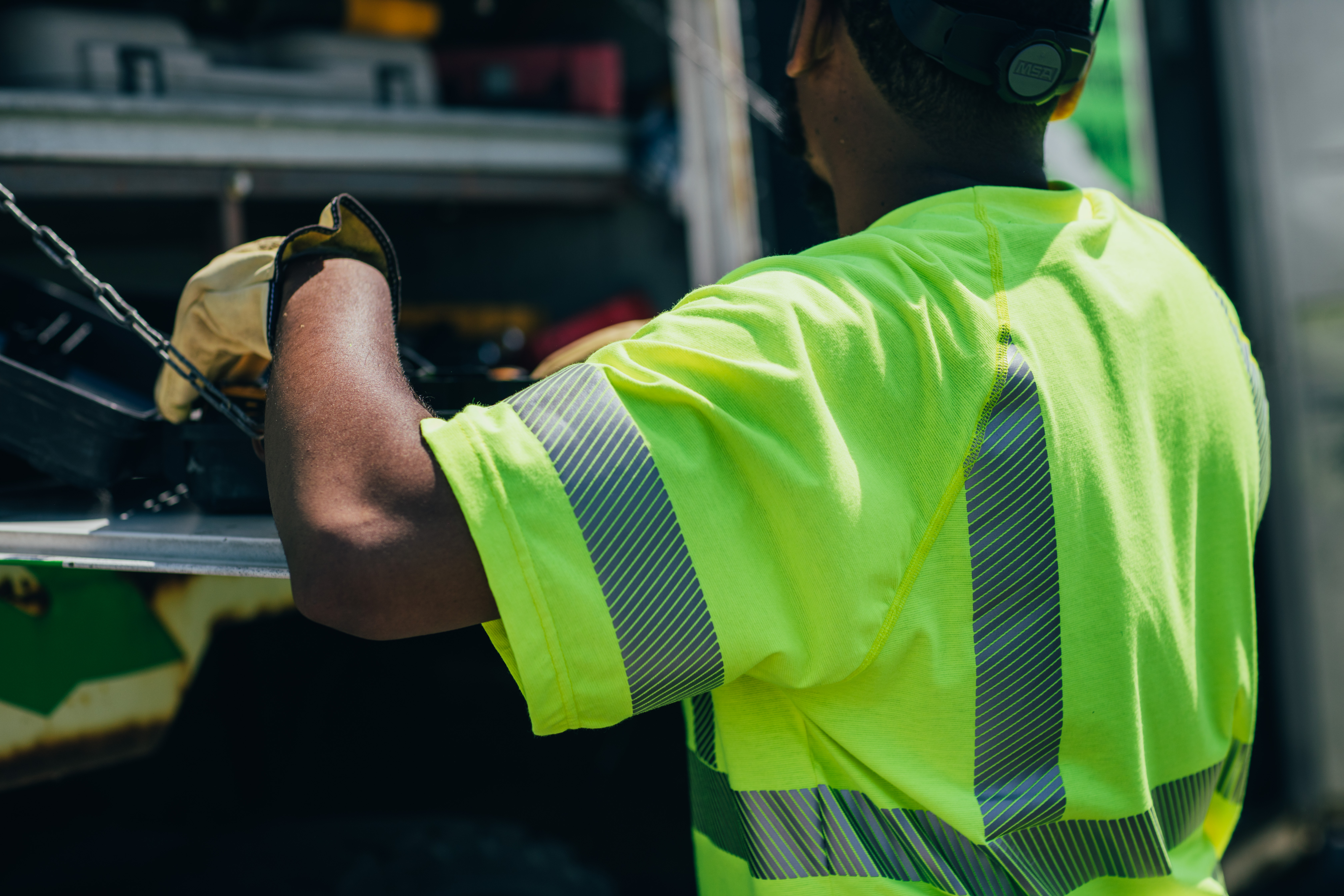
What is ANSI 107?
ANSI 107 is the standard governing high-visibility safety apparel (HVSA). It defines:
- Garment types based on work environments
- Performance classes based on visibility needs
- Design specs like retroreflectivity, biomotion emphasis, and garment configuration
While not an OSHA regulation, it is referenced under 29 CFR 1926.28 and required by FHWA 23 CFR Part 634 for anyone working near public roadways.
Type vs. Class: What’s the Difference?
To select the right HVSA, start with two questions:
- Where is the work taking place? This determines Type (O, R, or P).
- How much visibility is needed? This determines Class (1, 2, or 3).
Types (Work Zones)
| Type | Description | Common Use |
|---|---|---|
| Type O | Off-road only | Warehouses, oil & gas operations, mining, enclosed manufacturing |
| Type R | Roadway exposure | Highway work, utility/telecom crews near public roads, bridge maintenance |
| Type P | Public safety roles | Law enforcement, EMS, fire response, traffic control |
Classes (Visibility Levels)
| Class | Visibility Need | Minimum Requirements |
|---|---|---|
| Class 1 | Minimal coverage for non-complex environments with low-speed hazards | ~217 in² fluorescent + ~155 in² retroreflective tape, 1 in minimum width |
| Class 2 | Moderate coverage for improved detection at distance | ~775 in² fluorescent + ~201 in² retroreflective tape + 1.38 in minimum width of tape |
| Class 3 | Superior coverage with sleeve markings for complex environments | ~1,240 in² fluorescent + ~310 in² retroreflective + required sleeve or limb markings + 2 in minimum width of tape |
| Class E | Legwear/lower-body visibility only (must be paired with Class 2 or 3 top) | Does not meet ANSI 107 alone |
Why Just Any Hi-Vis Gear Won't Cut It
Many hi-vis garments are made from polyester, which can melt and burn under arc-flash or flash-fire exposure. When workers need visibility and thermal protection, they need dual-compliant FR gear. risk injury , they risk becoming less competitive.
DRIFIRE’s hi-vis FR garments self-extinguish, won’t melt, and maintain structural integrity even under high thermal stress.
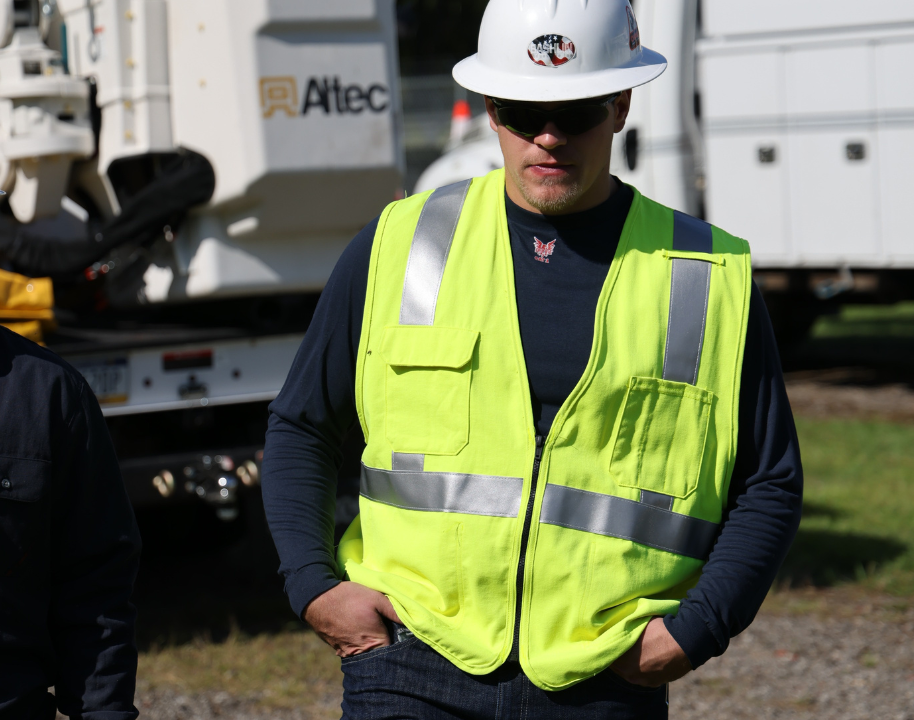
Key Use Case: Industrial Electrician
Industrial electricians exemplify workers who frequently need dual-compliant protective clothing. These professionals often work in low or no-light conditions while performing high-risk tasks that demand their full attention. Their FR clothing must protect against arc flash while ensuring they remain visible to others.
For electricians involved in rescue operations, visibility becomes even more critical as they may need to navigate hazardous environments during emergencies. Their clothing system should balance arc flash protection with visibility appropriate to their specific work environment.
| Environment Factors | Work Characteristics | Protection |
|---|---|---|
|
• Low-light work conditions • Potential complete darkness during outages • Indoor or outdoor exposure • Confined spaces with limited visibility |
• High-risk electrical tasks • Attention divided between multiple hazards • Often involved in emergency response • Rescue and recovery operations |
• NFPA 70E compliant arc-rated clothing • Enhanced visibility features • Arc rating appropriate for calculated incident energy • FR-rated reflective striping |
Comfort is Compliance
Uncomfortable gear often gets ignored. DRIFIRE prioritizes wearability with:
- Stretch panels for mobility
- Breathable, quick-drying fabrics
- Seasonal layering options for both heat and cold
- Color-blocking to help minimize the appearance of visible dirt
Workers perform better and stay safer when gear fits and breathes right.
How to Choose the Right DRIFIRE FR Hi-Vis Gear
- Assess your work environment (roadway, off-road, public safety).
- Determine required class based on speed, lighting, and exposure.
- Choose dual-rated garments with documented compliance and test data.
- Inspect gear regularly. Look for visibility degradation from soiling, wear, or tape damage.
- Train your team on proper wear, layering, and maintenance practices.
Explore DRIFIRE’s full line of high-performance FR hi-vis apparel, engineered for real risks and designed for true protection.
Stay in the loop.
Sign up for our emails to be the first to know about exclusive product offerings
and all things DRIFIRE.